About the Indigenous Nation of Onegodia™
A Connecticut-organized religious society dedicated to OneGodian spiritual identity, cultural preservation, internal governance, membership, historical education, and responsible community development.
Explore the institution’s origins, governing framework, public activities, and opportunities for voluntary participation.
IDENTITY • HERITAGE • PARTICIPATION
Rooted in purpose.
Organized for community.
An introduction to the principles and public-facing activities that guide INO as a religious, cultural, membership, and community institution.
About the Indigenous Nation of Onegodia™
A Connecticut-organized religious society dedicated to OneGodian spiritual identity, cultural preservation, internal governance, membership, historical education, and responsible community development.
Understand the institution’s origins, governing framework, public activities, and ways to participate voluntarily.
One Institution. A Clear Public Purpose.
The Indigenous Nation of Onegodia™ (INO) is organized around religious association, cultural heritage, member participation, institutional records, and community service. The OneGodian religious identity is grounded in the understanding of being related to, resembling, and belonging to One God.
INO provides a framework for voluntary community participation while respecting each person’s ancestry, existing citizenship, cultural ties, and affiliation with other Indigenous Nations.
Institutional status: INO is described in its materials as a Connecticut-organized religious society. Its own governing documents and membership records establish internal responsibilities; they do not, by themselves, establish federal or state tribal recognition, governmental nationality, or independent civil jurisdiction.
Four Institutional Pillars
Our public work is organized so visitors can understand its purpose and verify which initiatives are active, proposed, or in development.
Religious & Spiritual Identity
OneGodian teachings emphasize conscience, human dignity, justice, integrity, community care, and responsibility toward One God.
Heritage & Historical Education
Encourage family-history preservation, original-source research, oral history, and cultural education without treating unverified claims as established ancestry.
Membership & Internal Governance
Maintain defined membership classifications, authorized decisions, a constitutional record, and documented responsibilities.
Community & Institutional Development
Plan practical educational programs, partnerships, volunteer work, and a future physical location subject to funding and lawful approvals.
How INO Developed
Founding ideas, intellectual-property records, organizational filings, adopted constitutional documents, and present-day platform work have different dates and legal meanings.
OneGodian Origins
The OneGodian identity and related creative work preceded the INO institutional framework. The founder identifies November 29, 2009 as an important origin milestone; separate copyright records should be cited for legal details.
Connecticut Organization
INO institutional materials reference a Connecticut formation filing dated October 6, 2017. The controlling state record should be consulted for exact legal classification and current standing.
Constitutional Record
INO identifies February 23, 2020 as its constitution adoption date. Amendments, signatures, and present officer authority should be confirmed against current records.
Institutional Development
Current priorities include accountable membership administration, research, records, programs, public communication, and facility planning. Proposed systems are not presented as operational until verified.
Dates shown are drawn from INO’s identified historical records and remain subject to verification against the original documents and any subsequent amendments.
The Founder and the Institution
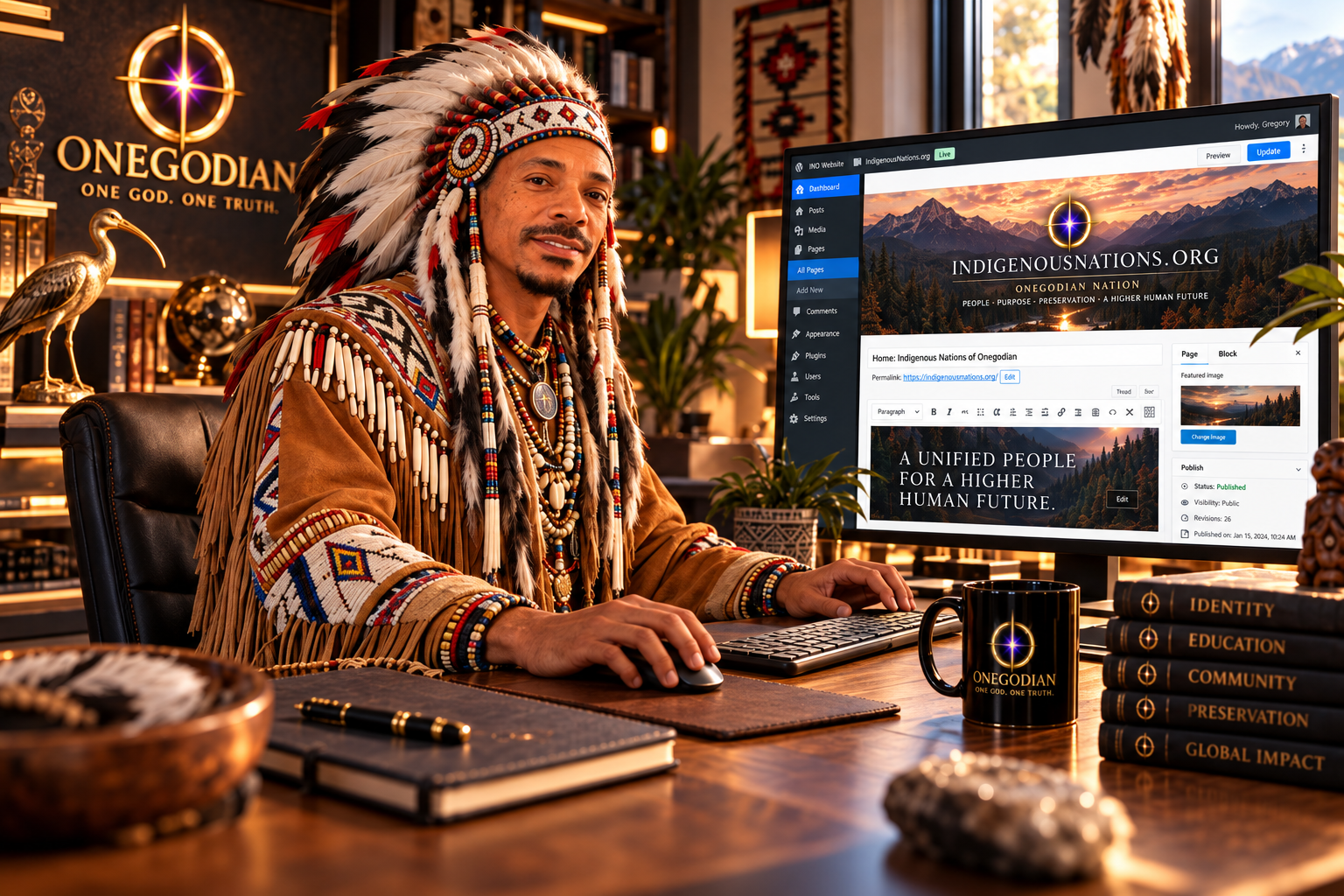
Founder image from the existing INO homepage; retain only if approved for this page.
One Gregory Onegodian™ developed the OneGodian identity framework and later established and served in leadership of INO. The organization’s internal offices and responsibilities derive from its governing instruments and documented authorizations.
His subsequent role as Supreme Architect of Sovereign Intelligence™ and Founder of ONEGODIAN™ relates to a distinct creative and commercial development framework. INO’s religious and institutional responsibilities remain separate from the private enterprise activities of ONEGODIAN, LLC.
Related To. Resembling. Belonging To One God.
OneGodian identity expresses spiritual conviction, not an assertion that members are divine beings, biologically descended from God, or holders of a superior civil status.
Related to One God
OneGodian teachings affirm a spiritual relationship to One God and the dignity of human life.
Resembling One God
The framework calls members to reflect justice, compassion, wisdom, love, honesty, and responsible conduct.
Belonging to One God
Belonging is expressed in voluntary faith, ethical responsibility, service, and community participation.
Religious membership does not replace a person’s ancestry, ethnicity, civil citizenship, or enrollment status in another Indigenous Nation.
From Documents to Practical Community Services
INO’s development priorities should become measurable services and transparent records, not simply website descriptions.
Governance & Public Records
Constitutional documents, institutional notices, historical records, and approved resolutions should carry dates, source authority, and publication status.
Membership Services
Eligible people may explore voluntary membership, application criteria, participation expectations, and official member-service channels.
Education & Heritage
Programs include cultural history, archival research, historical literacy, and educational partnerships, as resources and permissions allow.
Community Development
Longer-term objectives include educational facilities, gathering spaces, workforce development, and responsible housing-related initiatives.
Program availability: An informational page or software prototype does not establish a live member service, authorized enrollment decision, funded program, or completed physical facility. Refer to current program and platform-status records for verified operational status.
Clearly Defined Institutional Boundaries
Responsible participation depends on knowing which organization has authority for a program, which records are official, and what a membership or publication does not establish.
Indigenous Nation of Onegodia™
Religious and cultural association, internal governance, membership, institutional decisions, community programs, and public educational activities.
ONEGODIAN, LLC
Separate private commercial, publishing, software, licensing, educational, and related enterprise activities. Contracts and finances require distinct authorization.
Participating Nations & Communities
Other Indigenous Nations retain their own identity, leadership, laws, governance, citizenship rules, and representation. INO publication does not imply delegated authority.
A directory listing, shared declaration, institutional title, or internal credential does not convey recognition, nationality, immigration status, real-property title, or authority over another Nation.
Frequently Asked Questions
Is INO the same as a federally recognized Tribe?
No such recognition is established merely by INO’s organizational documents, religious membership, or use of the term “Nation.” Any asserted external recognition requires independent documentary support.
Does joining affect my civil citizenship or ancestry?
No. Internal religious and institutional membership does not replace civil citizenship, prove Indigenous ancestry, or establish enrollment in a separate Indigenous Nation.
Are INO programs and online forms already fully operational?
Not necessarily. Specific services require active deployment, approved policies, protected data handling, qualified staff, and verified workflow testing.
How can I participate without joining?
You may review educational materials, submit an appropriate inquiry, volunteer or propose a lawful partnership, subject to availability and INO approval procedures.
Understand the Mission. Preserve the Record. Participate With Purpose.
Explore INO membership and cultural programs, examine governing records, volunteer your skills, or contact the institution about a responsible partnership.
Public information and internal membership do not independently create governmental recognition, foreign or domestic nationality, outside tribal citizenship, immigration rights, property ownership, or legal immunity. Participation is voluntary and subject to applicable law and approved organizational policy.